Performing keyword research is a critical part of any digital marketing strategy. But first, let’s define what keyword research is. Keyword research is the practise of finding the most relevant topics about your business offerings to produce more content to increase organic traffic through to your website.
For example, a sporting goods store would be interested in keywords such as “best runners” for athletes and people with active lifestyles. From here, the sporting goods company could choose to write a blog post about “the best runners for 2022”.
Through identifying relevant keywords, these can help to bring more volumes of organic traffic through to your website. On top of this, these newly identified words can also provide more opportunities for product words that had not been initially identified.
Keyword research should be performed regularly, so that any newly identified opportunities are not missed and can be maximised through the development of new content. Content comes in many varieties, such as blog posts, infographics, video, and many other long form content types, such as e books and white papers.
There are many ways to go about keyword research. To start, there are many tools where you can put in your domain name and have the website scan for what it believes would be good additional keywords based on your current website content. One example of such product is the Google ads keyword planner tool. Through using this tool, you can search an entire domain or, input specific existing keywords to get knew keyword ideas. The new ideas will show the average monthly search volume for that phrase to help you identify whether it is worth your time and effort to pursue developing content around this keyword opportunity.
If we follow the sporting goods store example, we can try in putting some well-known phrases to flesh out some knew keywords. For example, let’s put in “running shoes”.
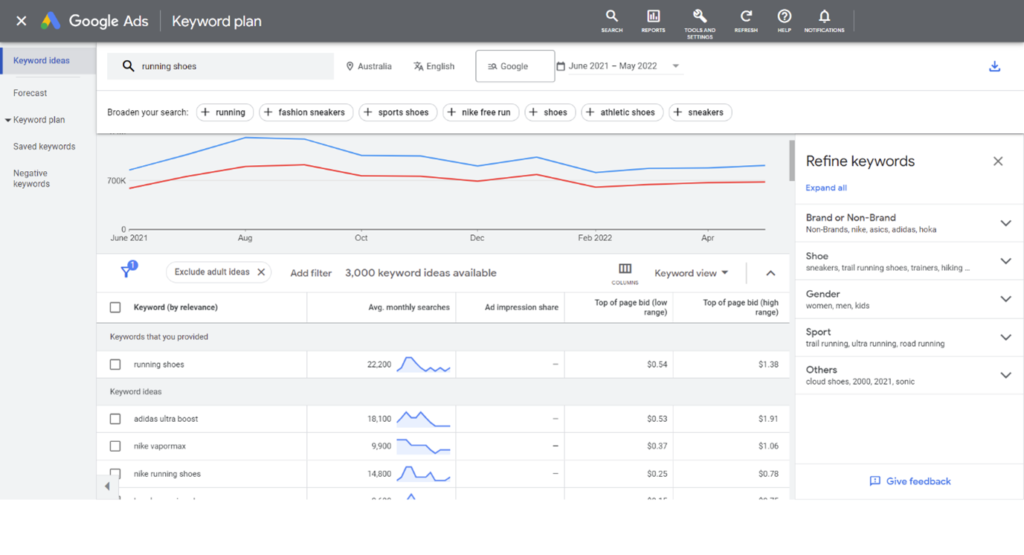
As we can see from the above example, the average search volume in Australia for the phrase running shoes is 22,200 searches per month. The Google ads keyword planner is quite intuitive, offering the keywords in relevance order first. This means that the words Google believes who pay the next most relevant and therefore closely related to your initial keyword in our case running shoes will be shown higher in the list and show their average monthly searches in Australia as well as the cost for the top page bid in a paper click environment. The Google ads keyword planner also allows you to filter on branded and non-branded keywords, top of shoe gender sport and other. In essence, Google is trying to help you flesh out more relevant keywords to the running shoe keyword with these suggestions.
Google also allows you to change from keyword view to what they call group view. The group view allows you to have the words grouped together in closely related clusters.
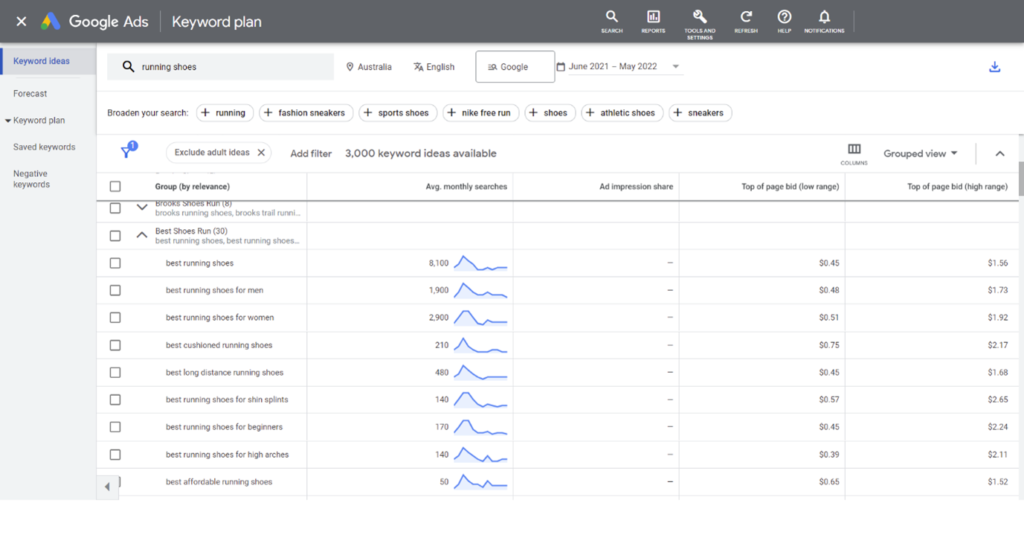
In the group view, there is a group labelled “best shoes run”. This cluster has closely related keywords around the best running shoes. This will be a good place to start for looking at more keywords to target running shoes with. If we continue with “the best running shoes for 2022” blog theme, we now have up to 30 additional keywords that we can use as part of that blog post and campaign.
The top keyword from this group is “best running shoes” with 8,100 searches per month in Australia. We can refine this further, by adding the gender for the shoe as well. We could do a blog post on the best running shoes for men which gets 1,900 searches per month or, the best running shoes for women which gets 2,900 searches per month. Smaller keywords such as “best affordable running shoes” only get 50 searches per month. While there are only 50 searches per month for this keyword, there is a high chance that that phrase is not highly sought after and ranking well for that keyword would be easier than targeting more popular keywords such as best running shoes with 8,000 plus searches per month.
Identifying clusters is a good way to ensure that your content is highly concentrated around one topic, and that the content is not too broad and makes the overall theme diluted and not as effective as it could be.
Tools such as answer the public can import your key word and return of list of questions, prepositions, comparisons, alphabetical’s, and related questions to your initial keyword. This can be a handy tool in helping to flesh out additional keywords or even ideas for blog titles for your content. If we use the running shoes keyword and input this into the engine, the results are extensive. If we Scroll down to the questions area, and look in the box labelled which, we can see that there is a keyword/phrase called “which running shoes are best for me”. This is an ideal title for a blog post in which we want to target people looking for running shoes specifically looking for the best running shoes and then personalising the title further by connecting with the user and finding the user the best running shoes for them.
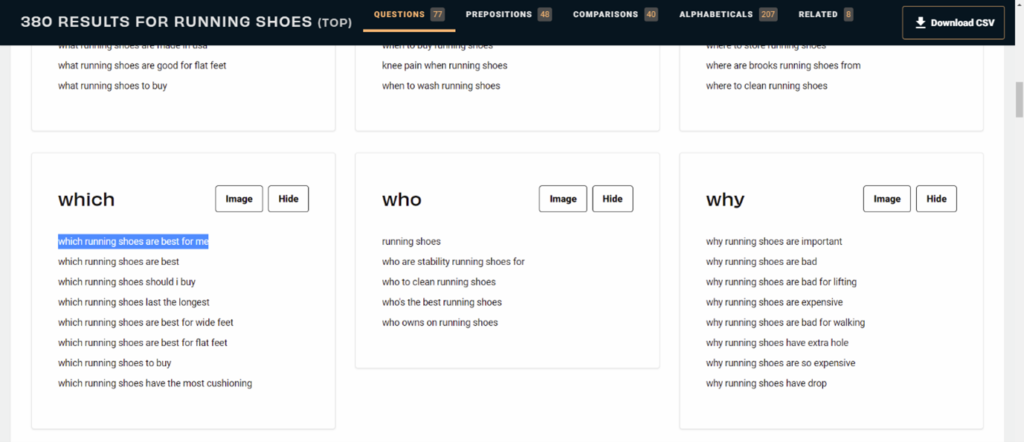
It’s important to note that the answer the public tool does not provide keyword search volumes it provides ideas to help you produce content. These ideas come from questions that have been input into search engines by actual users searching for your keyword.
Now to wrap this up let’s put together the top related keywords to running shoes that we want to use in this campaign for targeting users looking for the best running shoes.
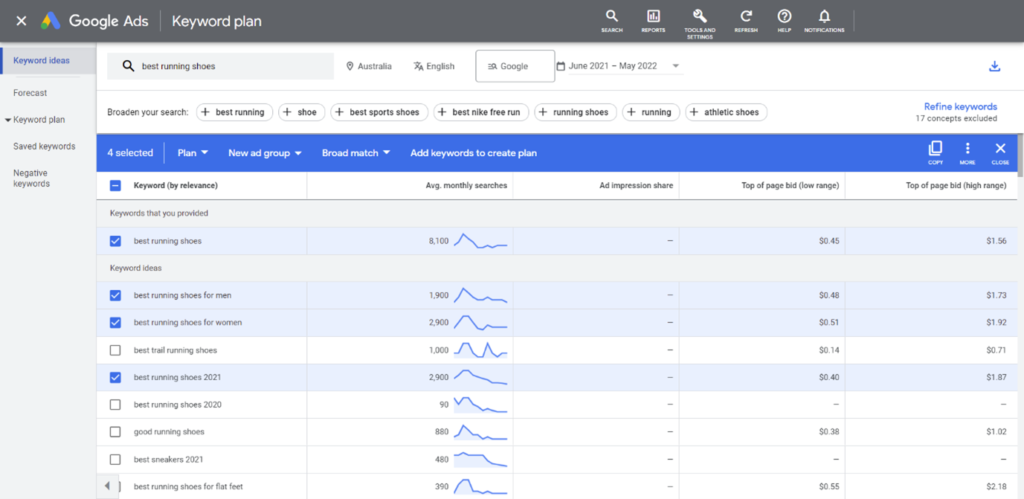
The top keywords we’ve outlined for our new phrase best running shoes, all contain the same three keywords running sequentially. While this is not a mandatory requirement, it can help you too keep track of your own keyword efforts and ensuring that your content is closely aligned with the initial keyword phrase that you are targeting with your blog post.
With all four additional keywords combined, there is the potential to increase organic visibility 15,800 users in Australia per month. It is important to note that the average monthly searches can be returning users as well as unique users searching for your keywords. This means that the number you see is not unique searches, it is total searches.
Keyword research is a powerful tool and when used correctly can help to improve organic visibility and traffic overtime. As with any SEO efforts, it is always a marathon not a sprint. Content generation is an ongoing task and will always need continued improvement.